

Location
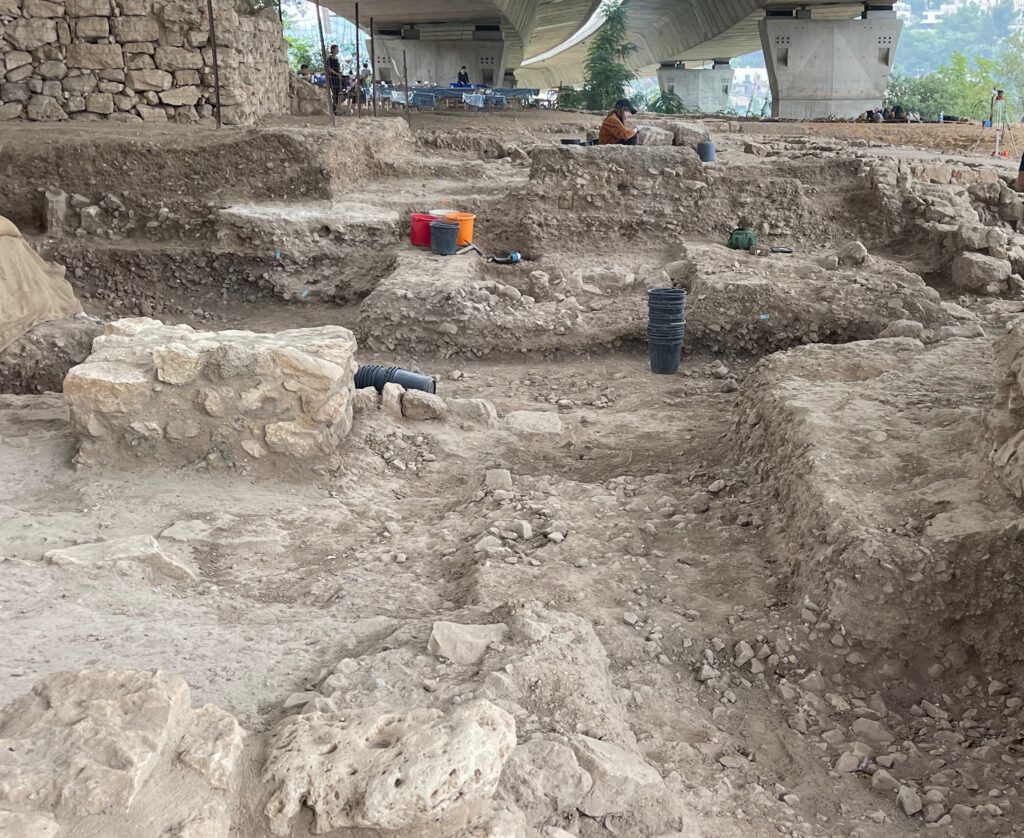
Tel Motza (Khirbet Mizza) lies about 7 km west of Jerusalem’s Old City, near today’s Motza, on a hill above Nahal Soreq and the Motza valley, on the road from Jerusalem to the Shephelah.
Identification
The site is identified with “Mozah” in the territory of Benjamin (Joshua 18:26), near Chephirah and Kiriath-jearim. The Mishnah and Talmud mention “Motza” as the place from which willows were brought to the Temple on Sukkot (Mishnah, Sukkah 4:5).
History
The site was settled from early periods, mainly in the Iron Age. In Iron Age II Motza was an administrative and economic center near Jerusalem, with large storehouses and silos for grain storage. In the 9th century BCE a temple was built here, which operated, with changes, until the end of the 8th or beginning of the 7th century BCE, in parallel with the Temple in Jerusalem.
Biblical Context
The Motza temple, the largest found in the Kingdom of Judah, is not mentioned in the Bible. It attests to worship outside Jerusalem before the reforms of Hezekiah and Josiah, in which the high places were removed and all worship centralized in Jerusalem (2 Kings 18:4, 22; 23:8).
History of Research
From 1993 salvage excavations took place at the site. In 2012 the Israel Antiquities Authority, in an excavation directed by Anna Eisenberg-Degen, Zvi Greenhut and Shua Kisilevitz, discovered the temple. Since 2019 an expedition of Tel Aviv University and the Israel Antiquities Authority, headed by Oded Lipschits and Shua Kisilevitz, has excavated the site.
Main Finds
The temple. A 9th-century BCE temple building with a courtyard with an altar, a standing stone and cult vessels.
Figurines. Human and horse figurines, including two clay human heads.
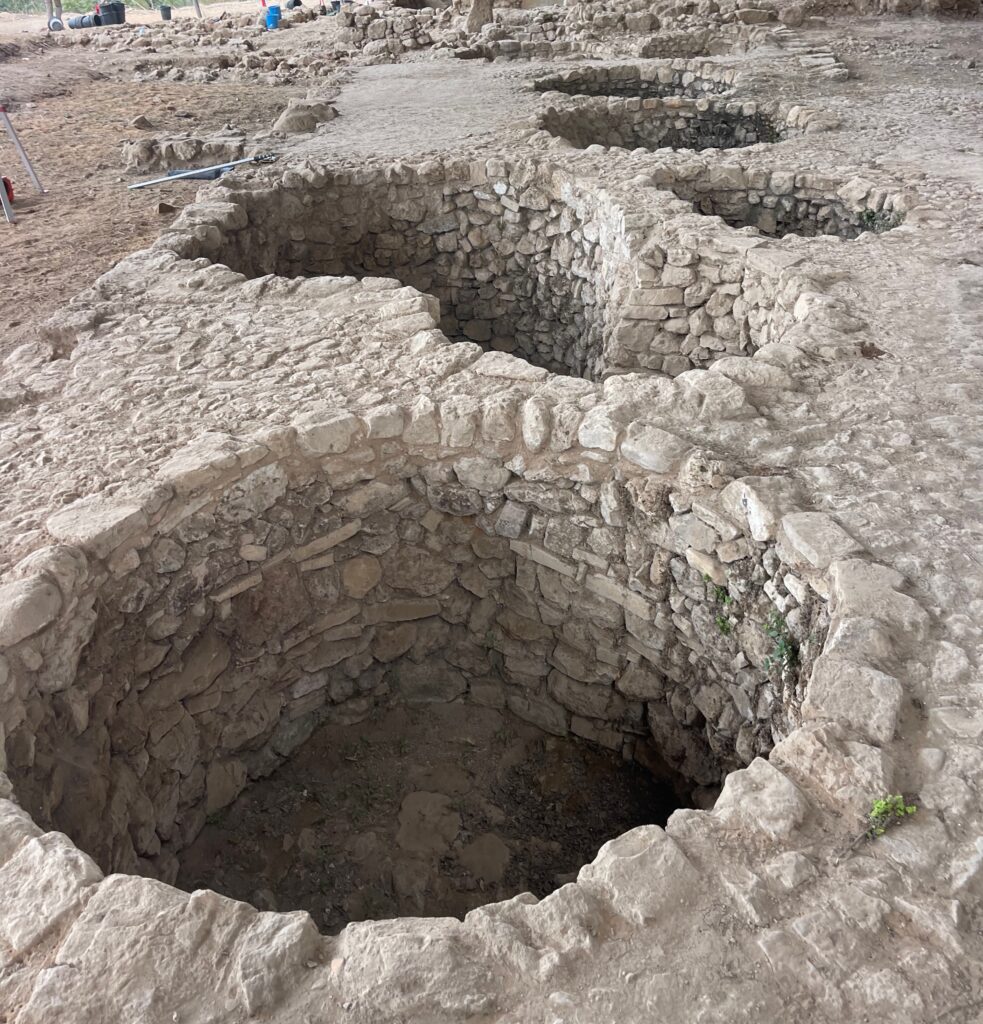
The silos. Large silos and grain stores, attesting to an administrative center for grain storage.
References
Greenhut, Z., & De-Groot, A. (2009). Salvage excavations at Tel Moza: The Bronze and Iron Age settlements and later occupations. Israel Antiquities Authority.
Khalaily, H., Re’em A., Vardi, J., & Milevski, I. (2020) Foreword: The Motza (Moẓa) excavations and beyond. In H. Khalaily, A. Re’em, J. Vardi, & I. Milevski (Eds.), The mega project at Motza (Moẓa): The Neolithic and later occupations up to the 20th century (pp. 9-18). Israel Antiquities Authority.
Kisilevitz, S. (2015). The Iron IIA Judahite temple at Tel Moza. Tel Aviv, 42(2), 147-164. Doi: 10.1179/0334435515Z.00000000052
Kisilevitz, S., Eirikh-Rose, A., Khalaily, H., & Greenhut, Z. (2014). Moẕa, Tel Moẕa. Hadashot Arkheologiyot: Excavations and Surveys in Israel, 126. https://www.hadashot-esi.org.il/report_detail_eng.aspx?id=10582&mag_id=121
Kisilevitz, S., & Lipschits, O. (2020). Tel Moza. Hadashot Arkheologiyot: Excavations and Surveys in Israel, 132. https://www.hadashot-esi.org.il/report_detail_eng.aspx?id=25702&mag_id=128
Mishnah Sukkah 4, The William Davidson digital edition of the Koren Noè Talmud, Sefaria website. Retrieved 27 April 2023. https://www.sefaria.org/Mishnah_Sukkah.4.5?ven=William_Davidson_Edition_-_English&lang=en
Sukkah 45a, The William Davidson difital edition of the Koren Noè Talmud, Sefaria website. Retrieved 27 April 2023. https://www.sefaria.org/Sukkah.45a?lang=en&with=About&lang2=en
Biblical Hiking map
Found an error or missing information in this entry? Let us know.